
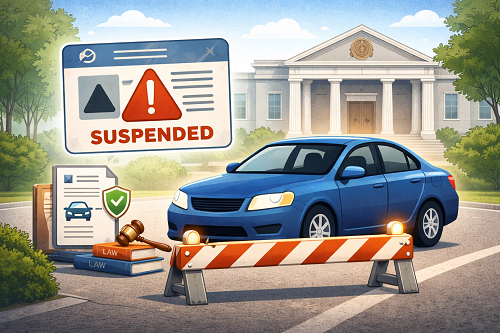
A driver’s license suspension is one of the most serious consequences of violating state motor vehicle laws. In many U.S. states, regaining driving privileges after a suspension requires more than simply paying fines or waiting out a penalty period. For drivers considered high-risk, the Department of Motor Vehicles (DMV) often mandates SR-22 insurance as proof of financial responsibility before a license can be reinstated.
This article explains SR-22 insurance requirements after license suspension, how these requirements work, and what suspended drivers must do to remain compliant under state law.
Understanding License Suspension and Financial Responsibility
License suspension occurs when a state temporarily withdraws a driver’s legal right to operate a motor vehicle. While reasons for suspension vary, many cases are directly related to insurance noncompliance or high-risk driving behavior.
Financial responsibility laws exist to ensure that drivers can cover damages caused by accidents. When a driver violates these laws, the state may impose enhanced monitoring through an SR-22 filing.
In this context, SR-22 serves as a legal safeguard, ensuring the driver maintains continuous insurance coverage once driving privileges are restored.
What Triggers SR-22 Insurance Requirements After License Suspension?
Not every suspended driver is required to file SR-22. The requirement is typically imposed when the suspension involves financial or safety-related violations.
Common triggers include:
Driving Without Insurance
If a driver is suspended for operating a vehicle without valid liability insurance, SR-22 is frequently required for reinstatement.
At-Fault Accidents While Uninsured
Causing an accident without insurance almost always results in a financial responsibility filing requirement.
Repeated Insurance Lapses
Multiple coverage lapses signal ongoing risk, prompting stricter DMV oversight.
Court-Ordered Suspensions
Traffic courts may mandate SR-22 filings as part of sentencing or probation conditions.
Core SR-22 Insurance Requirements After License Suspension
Once SR-22 is required, drivers must meet specific and ongoing legal obligations. These requirements are enforced by both the insurer and the DMV.
Continuous Liability Coverage
Drivers must maintain uninterrupted liability insurance for the entire SR-22 period. Even a one-day lapse can result in automatic re-suspension.
State Minimum Coverage Limits
Policies must meet or exceed state-mandated liability limits. Lower-limit policies are not eligible for SR-22 filings.
Insurer-Filed Documentation
Only the insurance company can submit the SR-22 filing. Self-submission is not allowed.
Mandatory DMV Reporting
If the policy is canceled, the insurer must notify the DMV immediately.
Minimum Liability Limits and State Variations
While SR-22 is a standardized filing, coverage limits vary by state. Most states require liability insurance that covers:
-
Bodily injury per person
-
Bodily injury per accident
-
Property damage
States with higher accident rates or stricter financial responsibility laws often impose higher minimum limits for SR-22 compliance.
Drivers must ensure their policy meets the specific state requirements tied to their suspension, not just general insurance minimums.
Reinstating a Suspended License with SR-22 Insurance
Meeting SR-22 insurance requirements is a critical step in the reinstatement process, but it is not the only one. Most states require a multi-step approach.
Step 1: Purchase an Eligible Policy
The driver must obtain an insurance policy from a carrier authorized to issue SR-22 filings.
Step 2: Insurer Files SR-22 with the DMV
Once coverage is active, the insurer electronically or physically submits the SR-22 filing.
Step 3: DMV Confirms Compliance
The DMV verifies receipt and acceptance of the filing.
Step 4: Pay Reinstatement Fees
Additional administrative or reinstatement fees may apply.
Step 5: License Status Updated
Only after all requirements are met will the DMV restore driving privileges.
How Long Must SR-22 Insurance Be Maintained?
The duration of SR-22 requirements depends on state law and the nature of the violation.
Typical filing periods include:
-
12 months for first-time insurance violations
-
24–36 months for repeat or severe offenses
The filing period begins only after DMV acceptance, not on the policy start date.
Canceling coverage early—even after license reinstatement—almost always leads to renewed suspension.
Consequences of Failing to Meet SR-22 Requirements
Failure to comply with SR-22 insurance requirements after license suspension carries immediate penalties.
Automatic License Re-Suspension
The DMV is notified instantly if coverage lapses.
Extended Filing Period
Noncompliance may restart the entire required filing duration.
Increased Insurance Costs
Violations further elevate risk status, resulting in higher premiums.
Court Penalties
Some states impose additional fines or legal sanctions for noncompliance.
Special Considerations for High-Risk Drivers
Drivers classified as high-risk face additional challenges when meeting SR-22 requirements.
Limited Insurance Options
Not all insurers accept high-risk drivers or issue SR-22 filings.
Higher Premiums
Rates reflect driving history, severity of violations, and filing duration.
Non-Owner SR-22 Policies
Drivers without a vehicle may qualify for non-owner policies that satisfy legal requirements at a lower cost.
How to Stay Compliant During the SR-22 Period
Maintaining compliance requires careful planning and attention.
Avoid Coverage Gaps
Set up automatic payments to prevent accidental cancellations.
Monitor DMV Status
Regularly verify that your filing remains active with the DMV.
Work with Experienced Insurers
Choose carriers familiar with SR-22 requirements and state reporting systems.
Renew Policies Early
Do not wait until the last day of coverage to renew.
Frequently Asked Questions About SR-22 After Suspension
Is SR-22 insurance always required after suspension?
No. It depends on the reason for suspension and state law.
Can I switch insurance companies during the SR-22 period?
Yes, but the new insurer must file a replacement SR-22 without any lapse.
Does SR-22 guarantee license reinstatement?
No. All DMV conditions must be satisfied, including fees and waiting periods.
What happens if I move to another state?
Most states coordinate through interstate systems, and compliance is still required.
Key Takeaways: SR-22 Insurance After License Suspension
-
SR-22 is often mandatory for reinstating a suspended license
-
Continuous coverage is legally required
-
Insurers report directly to the DMV
-
Violations result in immediate penalties
-
Compliance restores legal driving status and reduces long-term risk
Understanding SR-22 insurance requirements after license suspension allows drivers to regain their licenses responsibly while avoiding further legal trouble.